
Blog
Better Event Sustainability in 2026: 12 Ways over 365 Days
Natalie Williams shares strategies, insights, and tips for greener business events in the year ahead.
Author
If you’re ready to step up sustainability for 2026, now is the time to plan for greener conferences, incentive programs, and product launches. As a core founding member of PRA's Green Team, I’m a passionate sustainability advocate eager to share insights that create positive impacts for people and the planet.
My biggest lesson: Small steps can pave the way to big sustainability changes over time. Building a more sustainable future is ever evolving and a win for all.
Here are 12 sustainability steps we build into programs of all sizes that you can also consider taking. Focusing on just one a month will take you throughout the year, one step at a time.
Let’s step ahead.
-
Choose Venues with Environmental Certifications
Ask venues about any sustainability certifications they have, such as GBAC Star, LEED, Green Seal, ISO 14001, or local green building standards. Prioritize venues with certifications, if possible, when sourcing. At the very least, inquire about their basic sustainability policies.
Choose strategic partners who share your sustainability goals and values.
Our sales teams and experience designers partner with planners to collect precise sustainability details when proposing venues, enabling clients and leadership to deliver clear, comprehensive reporting.
-
Utilize Hotel Sustainability Programs
Many venues have sustainability programs that you can utilize. Consider working first with the host hotels that offer measurable sustainability initiatives, such as:
- Energy-efficient lighting systems
- Linen & towel reuse programs
- Food waste reduction initiatives (e.g., Lean Path)
- Green Meeting certifications (LEED, Green Key, ISO 20121)
- Water reduction and refill-station availability
Make the most of what your supply chain offers.
After an event, request the data or dashboards to track your event’s footprint. Measure what matters to keep sustainability moving forward.
-
Review Transportation Policies for Eco-Efficiency
Create a transportation plan that minimizes emissions with no-idling policies, consolidating shuttle routes, and determining the most direct paths. Our operations team reviews clients’ potential transportation routes, determining the most efficient.
Transportation policies are a win-win: they’re good for clients and the environment.
We also have a no-idling policy for all our programs, which reduces fuel use. Consider using smaller sedans or electric vehicles. Using EVs often depends on the infrastructure available in the region.
-
Partner Intentionally with Minority- and Women-Owned Businesses
This is all about strengthening the local ecosystem. Partnering with nearby and diverse suppliers for catering, AV, décor, printing, and staffing helps shorten supply chains, limit unnecessary transport, and keep investment within the community—creating benefits that extend well beyond the event itself.
The people portion of sustainability creates environments where all people—particularly minority and women-owned businesses—can flourish while also taking care of the environment.
Tap into the richness of local expertise.
This is our sweet spot. We discover and connect local vendors with the clients they fit, serving their specific needs with elevated service. That’s the beauty of working with a destination management company like us: We vet local vendors and have a sustainable vendor list to ensure we source based on your program needs.
-
Rent Furniture for Sustainable Style and The Circular Advantage
Renting furniture for events offers significant green benefits. It reduces waste and minimizes the carbon footprint associated with manufacturing and transportation. Instead of purchasing new pieces that may only be used once, rental furniture promotes reuse and extends the life cycle of high-quality items.
This approach conserves resources, decreases landfill impact, and supports a circular economy—making it an easy, sustainable choice for planners committed to eco-friendly practices.
Rent furniture for the short-term for long-term green impacts.
At PRA, we rent furniture through a resource of vetted suppliers. Renting furniture is not only a green practice, but it is also more cost-effective.
-
Eliminate Single-Use Plastics
Offer reusable water bottles, hydration stations, compostable serviceware, reusable, or rented china instead of disposable products.
Reuse, recycle, rent.
The demand for compostables serve ware has grown, resulting in more and better options, such as bamboo or compostable plastics made from renewable resources. If a client prefers not to use compostables (it may not be the right style for an elevated event), we can help source options that are still more earth-friendly than plastics or one-time use products.
-
Reduce Food Waste Through Sustainable Menu Planning
Choose menus with plant-forward options, regional produce, seasonal foods, and right-sized portions. Coordinate with caterers on food donation systems for safe redistribution.
Lean into the regional and plant options first for the most sustainable impact.
The challenge is to ensure there’s enough food without over allocating and creating waste. We help guide this process by working with venues or caterers, helping or choosing menu selections with a sustainability perspective.
Local regionality plays a big role. For example, fish would be a sustainable option in a destination near an ocean or lake, but less so in a desert region.
-
Implement Digital-First Event Materials
In our digital age, you are likely already doing this. Replace printed agendas and brochures with mobile apps, QR codes, and digital signage to reduce paper waste.
Be digital first.
We can tell your story at an event digitally with a cohesive design and seamless production throughout. Team building activities can also be digital, for instance, using QR codes rather than paper for activities like a scavenger hunt.
Blend strategy and storytelling with digital technology for show-stopping impact, all while being more sustainable.
-
Offer Sustainable Swag or Be “Swag-Intentional”
If giveaways are being used, be intentional and choose items that are sustainable, locally made, useful, or meaningful, or consider a charitable donation in place of swag.
Rethink swag and give intentionally, or not at all.
We are swag intentional at PRA, and it is the future. Some examples include swag catalog shopping experiences, mini stores, and custom swag athleisure or sneaker swag from a wellness-themed event.
Beyond improving sustainability, being swag intentional gives a unique experience built just for you and your guests.
-
Create Recycling, Composting and Waste Sorting Stations
Ensure visible, well-labeled waste stations are available throughout the venue. Provide staffing or volunteers to help attendees sort items correctly.
Make this a standard practice.
This may be a standard practice for many venues. We recommend engaging venues in this conversation on the front-end while sourcing for the event to ensure the sustainability stations are in place.
-
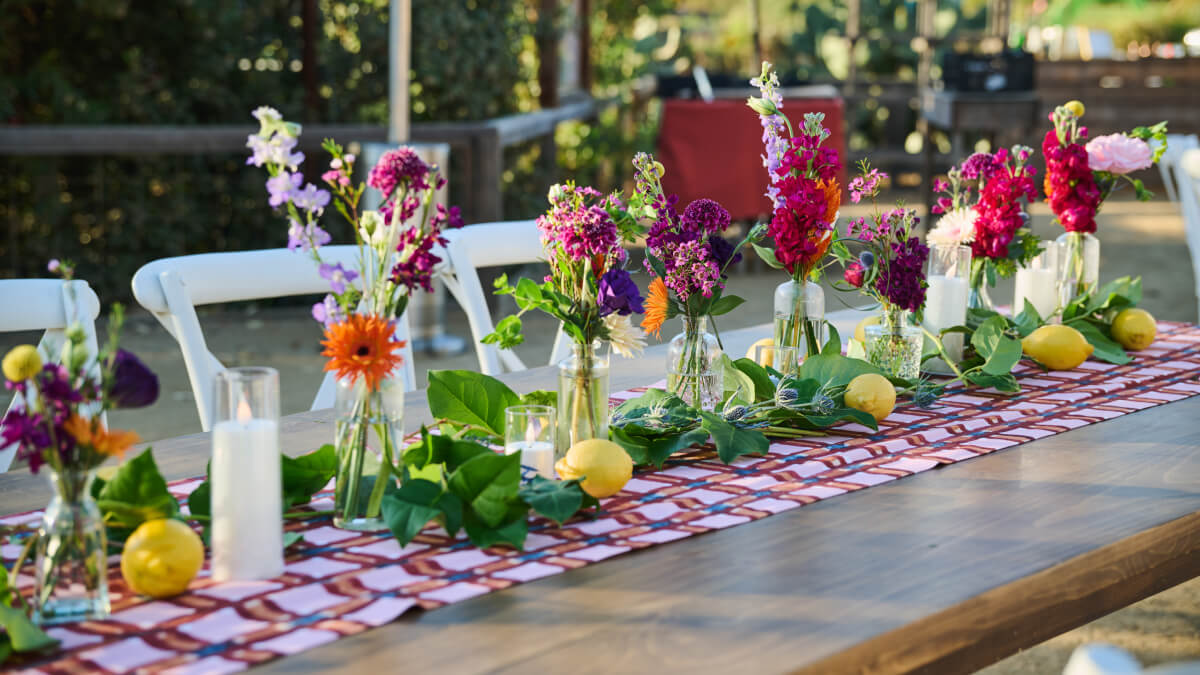
Compost or Donate Floral Arrangements
Partner with local farms or composting services to repurpose floral waste, or donate florals to local schools, shelters, or senior centers after an event. In Atlanta, where I’m based, we work with Compost Now, which picks up discarded florals from client events. Event producers can also bring florals to your local compost center if pick-up isn’t available.
Keep the beauty of floral's growing by donating and composting.
Donating can be as simple as bringing the florals to local schools for teacher or administration appreciation. I regularly do this at the Atlantic Public School my children attend.
-
Incorporate Sustainability Education
Add signage or programming that highlights sustainability initiatives, such as speaker sessions, behind-the-scenes tours of green facilities, or attendee challenges to reduce waste.
Spread the knowledge through articles, newsletters, and social media too. Provide opportunities for employees to get involved in green initiatives or challenges too. Develop sustainability guides, processes, and best practices for employees to use in their day-to-day.
Turn awareness into action.
We’re creating a snowball effect of sustainability for clients. As the green team grows and advances our sustainability practices, more employees want to get involved and take the small steps to be more sustainable over time.
Take the steps, share success, and build momentum.
Beyond taking any of these 12 steps to sustainability, it’s equally important to track and report your event sustainability metrics. Be sure to measure things like energy use, water, waste diversion, food waste, transportation footprint, and total rented, recycled, or composted materials. Of course, working with a venue that has sustainability programming or certifications will make it easier to measure some of these metrics.
Share results in a post-event impact report. There’s potential to add to the reports too. For instance, if we compost florals after an event, we include the amount composted in the report to provide the full sustainability picture that can be shared with clients, leaders, and even in broader sustainability reports.
I’m proud to be part of PRA's commitment to sustainability, leading the Green Team. We’re at the start of our journey and are already making an impact with our first steps. Let’s walk the path together to a more sustainable 2026.