Nicole Hess
Global Sales Director
Blog
Global Sales Director
There's an electric vibe that runs through a city on game day. If you've been in Boston when the Red Sox clinched, walked through Pittsburgh's stadium district on a Steelers Sunday, or felt the roar of MetLife before kickoff, you’ve felt it.
Now imagine that energy—multiplied. Not for just one game, but for one of the biggest sporting events on the planet.
From June 11 through July 19, FIFA World Cup 2026™ will unfold across 11 U.S. cities, alongside host cities in Canada and three in Mexico.
And it’s no coincidence that many of these cities are already proven sports capitals.
According to WalletHub’s Best Sports Cities 2026 rankings report, several FIFA host markets also rank among the nation’s top destinations for professional football, baseball, basketball, soccer, and hockey.
Here’s a look at the five best sports cities in the U.S.—and why transportation and transfer planning for this summer needs to start now.
Boston tops them all. Ranked the No. 1 hockey city and No. 2 basketball city in the country, sports here aren’t a pastime. They’re woven into the city’s identity.
“The infrastructure around sports here is built differently,” says Michaela Foley, Regional Vice President, Northeast, PRA. “You can walk or Uber from Boston Common, the heart of the city, to TD Garden in about ten minutes. When a championship is in the air, the whole city feels it.”
For FIFA 2026, Boston will host seven matches at Gillette Stadium. While the city is no stranger to global events—having hosted the men’s World Cup in 1994 and Women’s World Cups in 1999 and 2003—its tightly clustered venues leave little room for improvisation. Routes and road closures change daily. Last‑minute logistics rarely work.
Los Angeles ranks second overall for obvious reasons: The Lakers. The Dodgers. The Rams. LAFC. The Chargers, Clippers, Kings, Angels, and LA Galaxy. Few cities can match the depth—or star power—of LA’s sports culture.
But LA’s scale brings complexity. Traffic and the distant geographical sprawl can challenge even experienced planners.
With FIFA matches at SoFi Stadium placing the city on the global stage, vetted ground transportation becomes critical. In a city where timing is everything, the right transfer strategy can mean the difference between a seamless experience and a frustrating one.
This city shows up. Ranked No. 3 overall by WalletHub—and the No. 1 football city in America—its sports culture lifts the entire city.
“Pittsburgh dives in,” says Danyelle Kennedy, Global Sales Director, PRA. “Fans tailgate for hours no matter the weather. The stadiums are beautiful and close together, and the energy spills into the streets from start to finish. It’s electric.”
While Pittsburgh isn’t a FIFA 2026 host city, its proximity to host markets like Philadelphia—combined with year‑round sports tourism appeal—makes it a smart overflow option planners shouldn’t overlook.
No city rivals New York’s concentration of professional sports franchises: the Yankees, Mets, Giants, Jets, Knicks, Nets, Rangers, Islanders, NYCFC, and the New York Red Bulls—all concentrated under one skyline. “It just transcends so many different sports disciplines,” says Michaela. WalletHub also ranks New York as the No. 1 baseball city in the country.
For FIFA 2026, New York will host the World Cup Final—making it the epicenter of global attention.
“With that comes complexity,” Michaela notes. “Hotels fill from every direction. Road closures stack quickly. And while the subway is extensive, it doesn’t serve every venue.”
For events of this scale, executive transfers and trusted ground transportation aren’t luxuries—they’re infrastructure.
Dallas rounds out the top five—and for FIFA 2026, it plays an outsized role. The city will host nine matches, more than any other U.S. location.
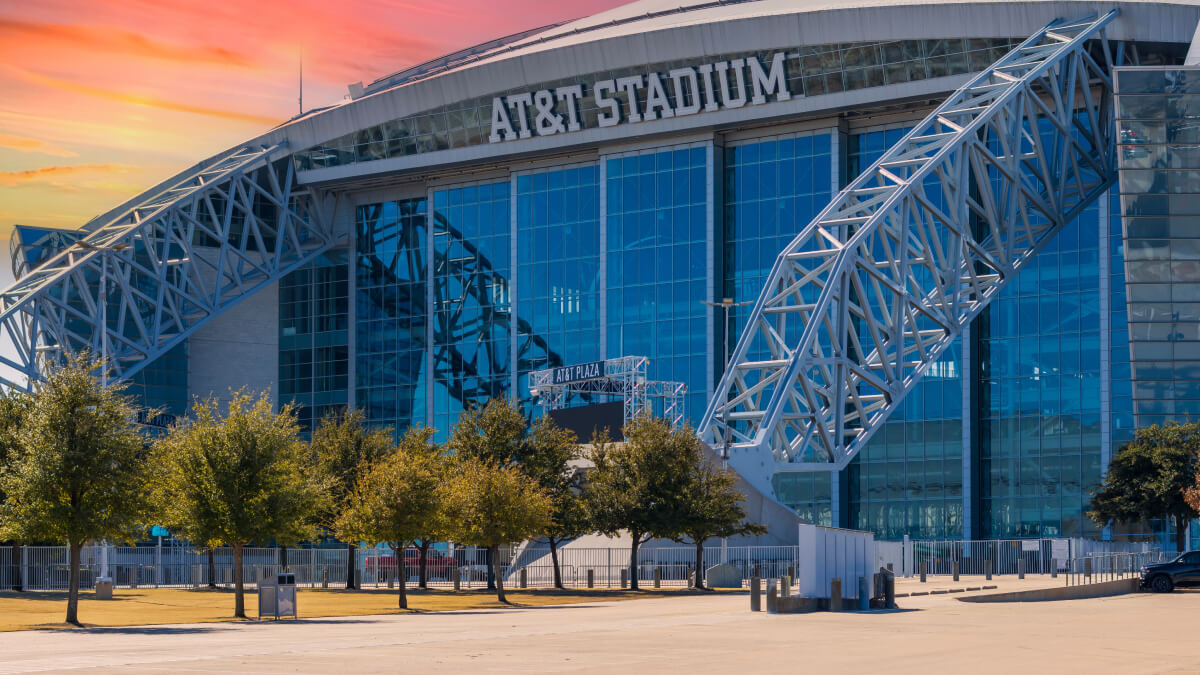
Sports are in Dallas’s DNA. The Cowboys, Mavericks, and Stars command loyal followings, and AT&T Stadium stands among the most recognizable venues in the world. The city also served as the International Broadcast Center for the 1994 World Cup, reinforcing its experience on a global stage.
What sets Dallas apart is scale. Venues are expansive. Distances are significant. Traffic patterns can shift quickly on event days—especially when security perimeters and broadcast operations are in play.
Even seasoned planners can be caught off guard. It’s not just hotel availability or venue access—it’s the ground‑level logistics that determine whether an experience runs smoothly:
Each city will also have unique intricacies around a global event like FIFA. And you need to know them. For example, train tickets and shuttles may need to be booked in advance but proof of a FIFA ticket might be required to even book local transportation. Parking and drop-off requirements will also vary by city. It’s extremely nuanced and requires in-depth pre-planning—that’s where PRA comes in.
As Nicole Chow, Global Sales Director, puts it, transfers—airport arrivals, hotel movements, venue access—require partners who manage the experience, not just the route.
America’s best sports cities are about to host the world. Boston will buzz. Los Angeles will dazzle. Dallas will roar. New York will crown a champion.
The experience will be extraordinary—but only if the logistics work.
Secure your ground transportation. Lock in your transfers. Make sure that when your group arrives, the only thing they have to focus on is the game.
If FIFA World Cup 2026 is on your radar, let’s connect and start mapping your transportation strategy now.